Skip to content

Lipedema Stage Finder

Answer 3 short questions about your skin texture, nodules, and tissue shape to find your likely lipedema stage. The visual gallery below shows all stages so you can compare — and all information is always visible for those without JavaScript.

How does the skin surface of your thighs look when you’re standing?

What do the nodules (lumps) you can feel under the skin feel like?

Do you have lobules or overhangs of tissue?

Do your feet or toes swell, or does pressing firmly on your foot leave a lasting dent?

Visual Stage Gallery — All Stages

Lipedema is staged by examining the legs. All five recognized stages are shown below. Your highlighted result appears at the top when you submit; the full gallery is always visible so you can compare.

Stage 1

Illustration of legs with smooth skin in stage 1 lipedema

Skin surface is smooth. Fat tissue is abnormal and painful under pressure, but the difference is often invisible to the naked eye. Nodules feel like small grains of rice or pearls. Limb shape and proportions look relatively normal.

  • Smooth outer skin
  • Pressure pain disproportionate to the touch
  • Small grain-like nodules
  • No lobules or overhangs
  • Bruises easily

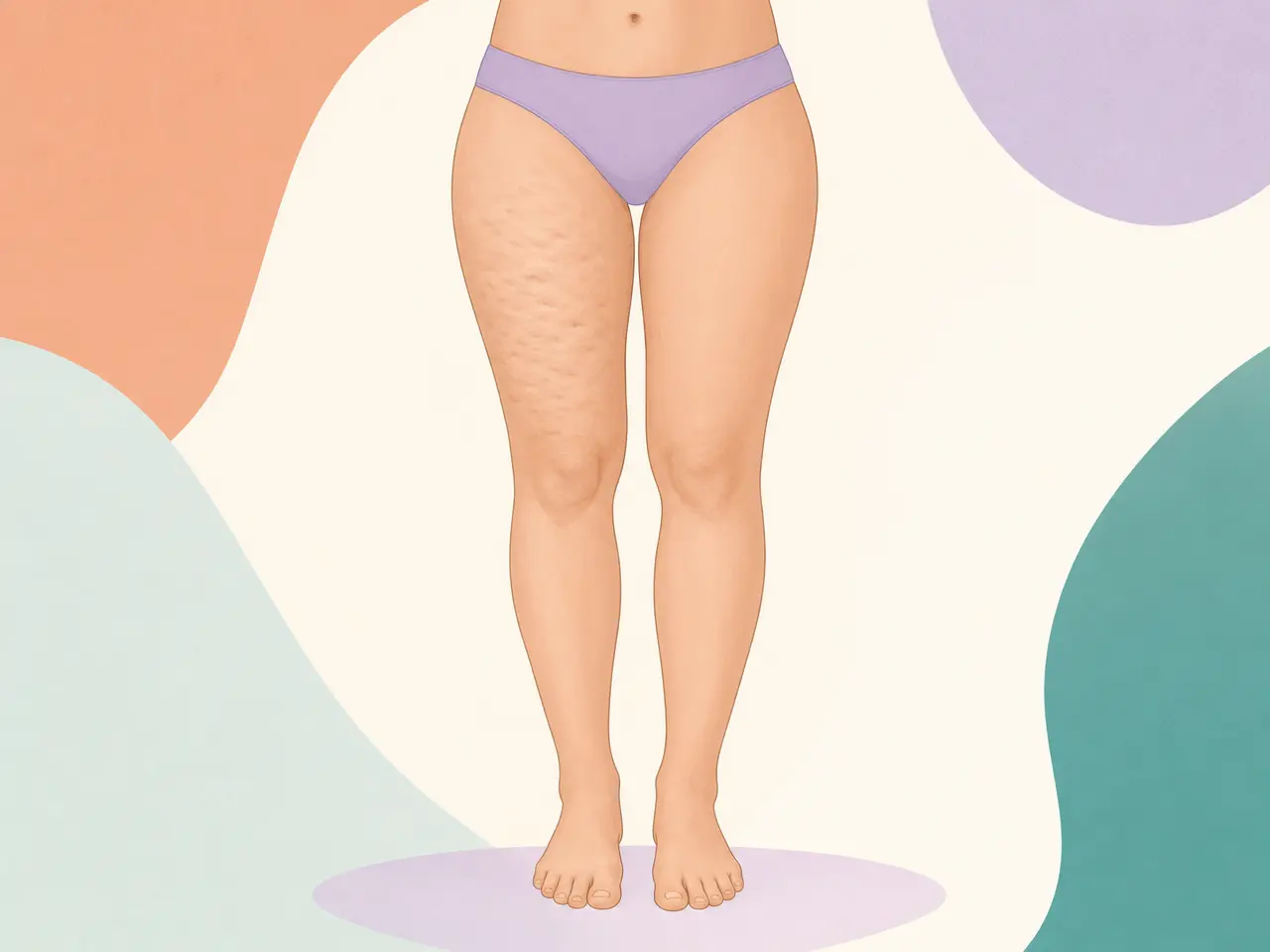
Stage 1.5

Illustration of legs with faint dimpling in stage 1.5 lipedema

An intermediate stage recognized in 2025 research. Dimpling appears on part of the thigh — more than Stage 1 but not yet the full orange-peel texture of Stage 2. Useful for tracking progression and refining treatment.

  • Partial dimpling on some areas
  • Nodules slightly larger than Stage 1
  • No full-limb orange-peel yet
  • Pain on light pressure
  • Recognized in 2025 staging refinement

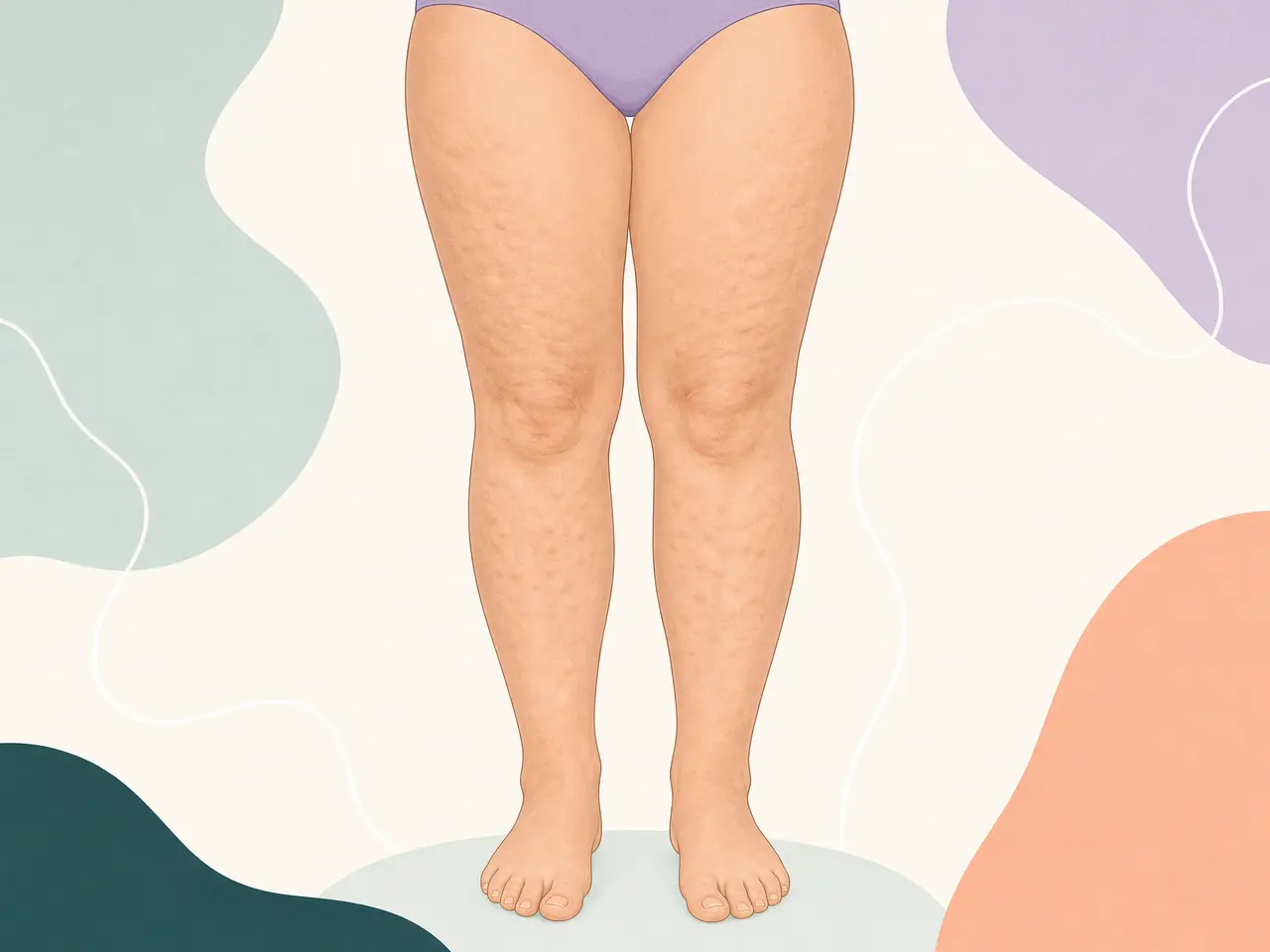
Stage 2

Illustration of legs with orange-peel texture and nodules in stage 2 lipedema

Orange-peel (peau d'orange) dimpling covers the whole thigh. Nodules are larger — pea- to walnut-sized. The limb outline is still relatively even, but the texture change is consistent around the whole limb.

  • Even dimpling over the whole thigh
  • Pea- to walnut-sized nodules
  • No significant lobules yet
  • Increased pressure pain
  • Possible early heaviness/fatigue

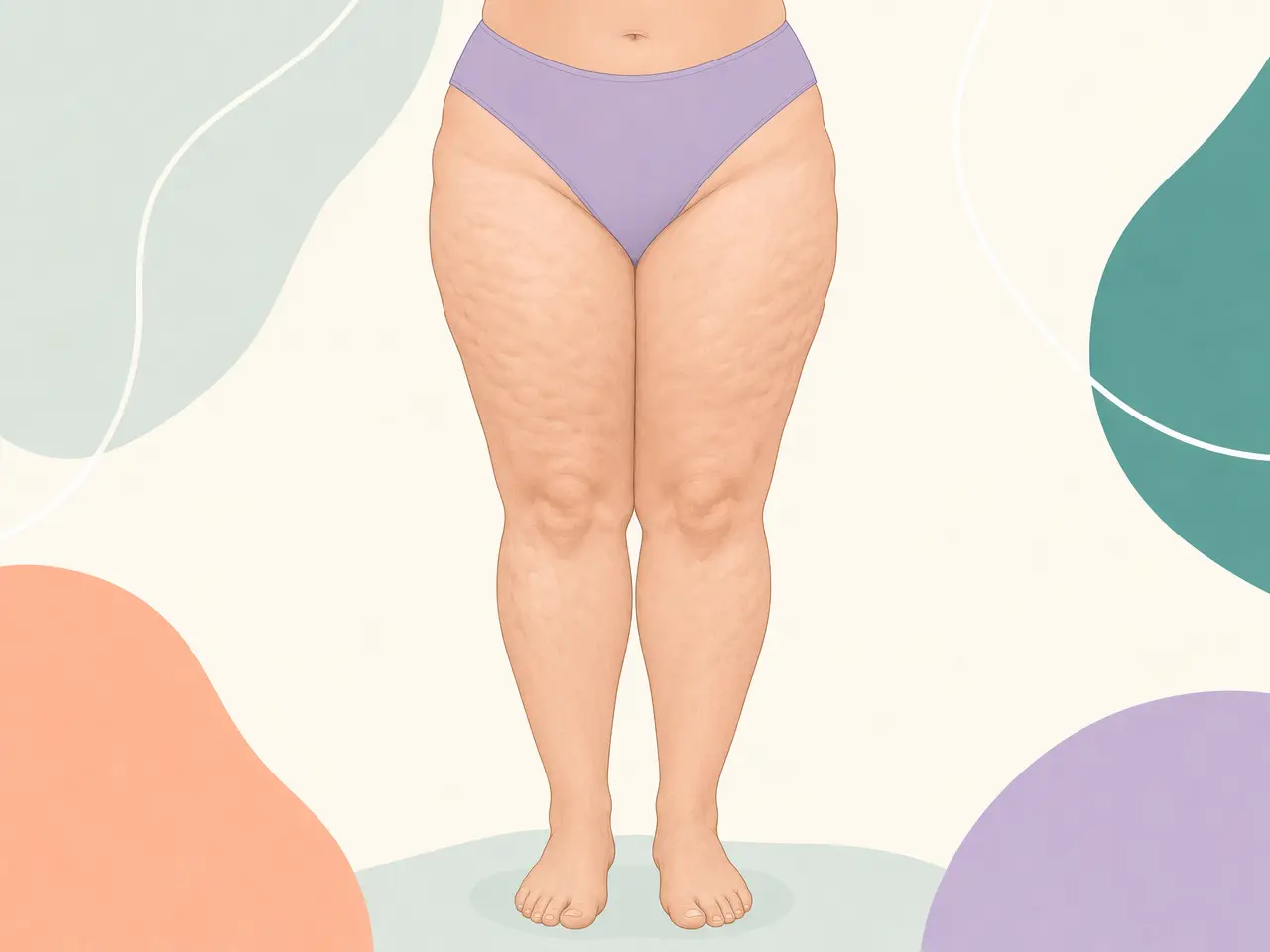
Stage 2.5

Illustration of legs with widespread dimpling and small lobes in stage 2.5 lipedema

Another 2025 intermediate stage. Early lobules or tissue lumps are starting to form, particularly at the hips or the inner knee. Dimpling is present throughout but the overhangs are not yet fully developed.

  • Dimpling everywhere
  • Early lobule/lump formation at hips or knees
  • Not yet the full overhangs of Stage 3
  • Recognized in 2025 staging refinement
  • Guides timing of more intensive treatment

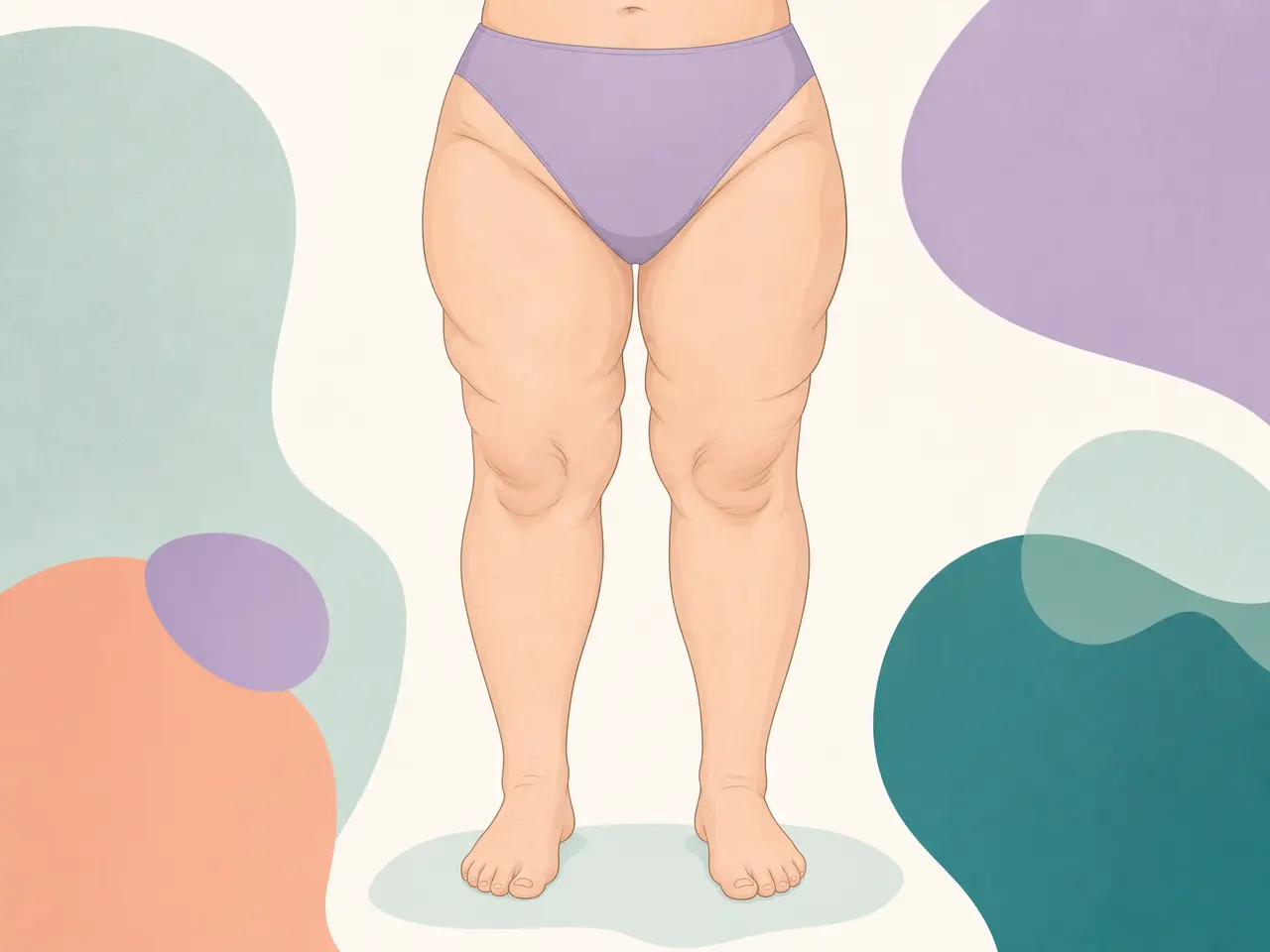
Stage 3

Illustration of legs with large soft lobes in stage 3 lipedema

Large, soft lobes of tissue (lobules) form at the inner thighs, behind the knees, or around the ankles. These overhangs can affect walking, hygiene, and quality of life. Skin folds create areas prone to intertrigo. This is the most severe stage.

  • Large soft lobes/overhangs
  • Affects gait and daily movement
  • Significant pain
  • Prone to skin infections in folds
  • Often requires specialist MDT care

Frequently asked questions