Manual lymphatic drainage (MLD) for lipedema
Gentle, effective — but not magic. Here is what MLD can and cannot do.
- Researched against current medical guidelines
- Every claim sourced & linked to a named authority
- Independent — we don’t sell surgery
- Not a substitute for your doctor.
Manual lymphatic drainage (MLD) is a gentle, skin-stretching massage that can ease pain and comfort in lipedema. Evidence is limited, and in pure lipedema (without fluid swelling) there’s little fluid to move — so its main value is symptom relief, with a bigger role once lymphedema is present.
On this page
What is manual lymphatic drainage?
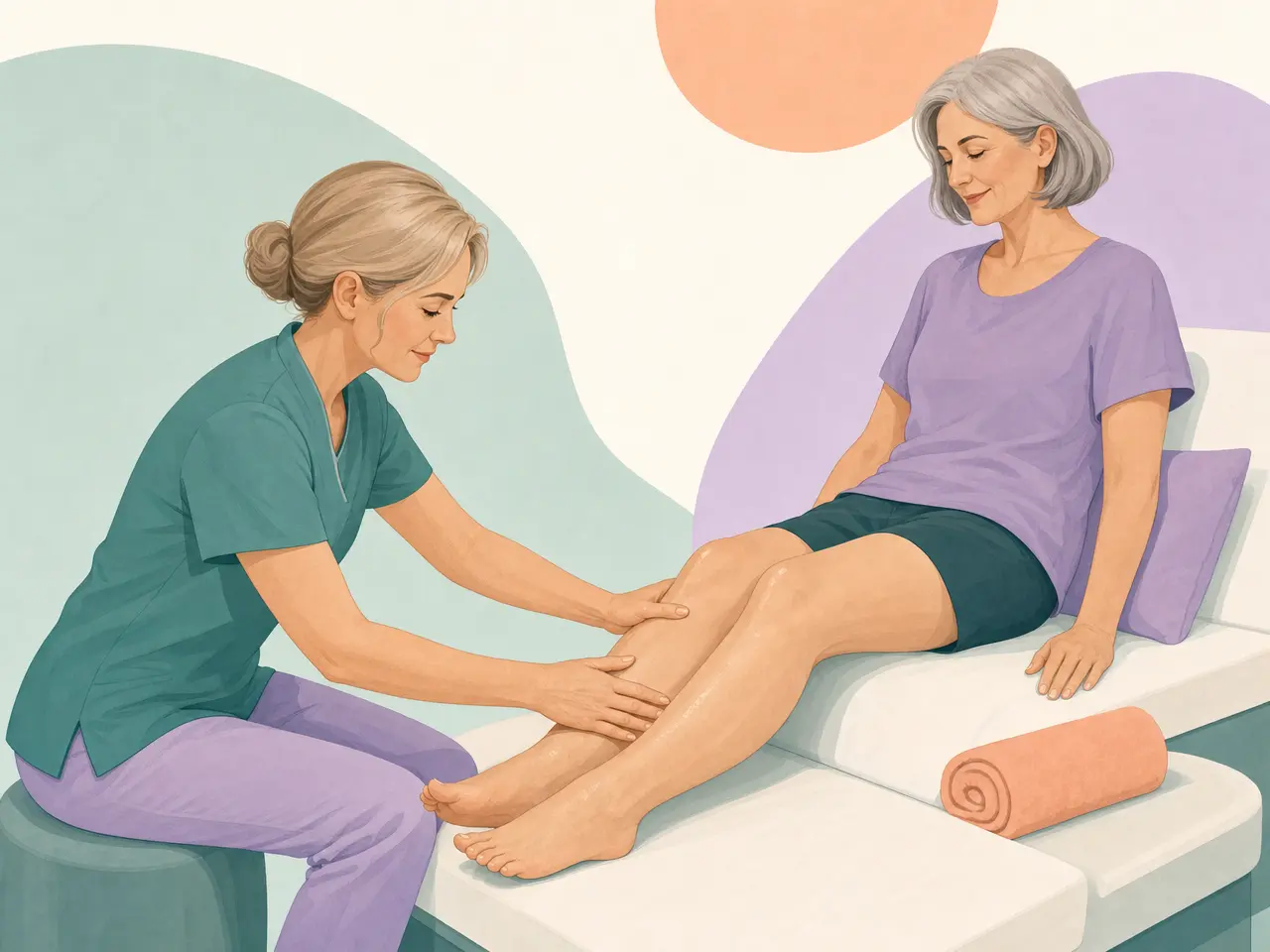
Manual lymphatic drainage (MLD) is a specialised massage technique that uses very light, rhythmic, skin-stretching strokes — not the deep pressure of traditional massage — to stimulate lymphatic vessels just below the skin. It differs from Swedish or deep-tissue massage in that the pressure is deliberately gentle.
In lipedema, MLD is used to reduce pain, heaviness, and discomfort, and to support general lymphatic health. (Herbst et al., Standard of Care, 2021)
What does the evidence say?
Honest evidence summary
Evidence for MLD in pure lipedema (without lymphedema) is limited. In pure lipedema, there is little excess fluid to drain — so the benefit is primarily pain and symptom relief, not fluid reduction. MLD plays a larger role when both lipedema and lymphedema are present (lipolymphedema).
Patients frequently report reduced pain, decreased heaviness, and improved wellbeing after MLD sessions. As part of the CDT protocol, it is a component of the evidence-based care pathway — not a standalone cure.
What about pneumatic compression pumps?
Intermittent pneumatic compression (IPC) devices — air-filled sleeves that squeeze the limb in cycles — can complement MLD, particularly for home use between professional sessions. Multi-chamber, gradient devices are preferred over simple single-chamber pumps. Always use under guidance from a certified lymphedema therapist.
Can I do lymphatic massage at home?
Yes — self-MLD is a practical part of the maintenance phase and can reduce the number of professional sessions needed. A certified lymphedema therapist (CLT) can teach you the correct technique for your specific presentation.
- Use very light touch — the lymphatic vessels are just under the skin.
- Begin at the lymph node clusters (neck, armpits, groin) to open the drainage pathways before working the limbs.
- Stroke toward the nearest lymph node group, not away from it.
- Sessions of 10–20 minutes daily are more effective than occasional longer sessions.
How do I find a certified therapist?
Look for a Certified Lymphedema Therapist (CLT) — a physical therapist, occupational therapist, or massage therapist with a recognised lymphedema certification (e.g., from the Lymphatic Education and Research Network or a Vodder/Földi-trained school). Not all massage therapists are trained in MLD.
Sources
- Herbst KL et al. — US Standard of Care, Phlebology 2021 journals.sagepub.com