What does lipedema look like? A visual guide by stage
- Researched against current medical guidelines
- Every claim sourced & linked to a named authority
- Independent — we don’t sell surgery
- Not a substitute for your doctor.
Lipedema looks like symmetrical, disproportionate fat in the legs (and often arms) with a "cuff" at the ankles where the feet stay normal. Its look ranges from smooth skin with tiny nodules early on to larger lobes of tissue later. Many presentations are subtle — early and lean lipedema looks far less dramatic than the extreme cases most often pictured online.
On this page
About these illustrations
Why illustrations, not photos?
The images on this page are editorial illustrations, not patient photographs. This is a deliberate choice: AI-generated photoreal "patient" images raise serious ethics concerns on a medical site, and most lipedema photographs online are extreme late-stage cases that don't represent most people's experience. Illustrations let us show the full range — including early, lean, and non-dramatic presentations — respectfully and accurately. Real patient photographs require documented consent and are out of scope for this site.
Important: The range of lipedema appearances is wide. If your legs look much milder than Stage 3 illustrations, that does not rule out lipedema. Many people with significant pain and functional impact have Stage 1 or 2 lipedema that looks fairly unremarkable in photographs.
What does Stage 1 lipedema look like?
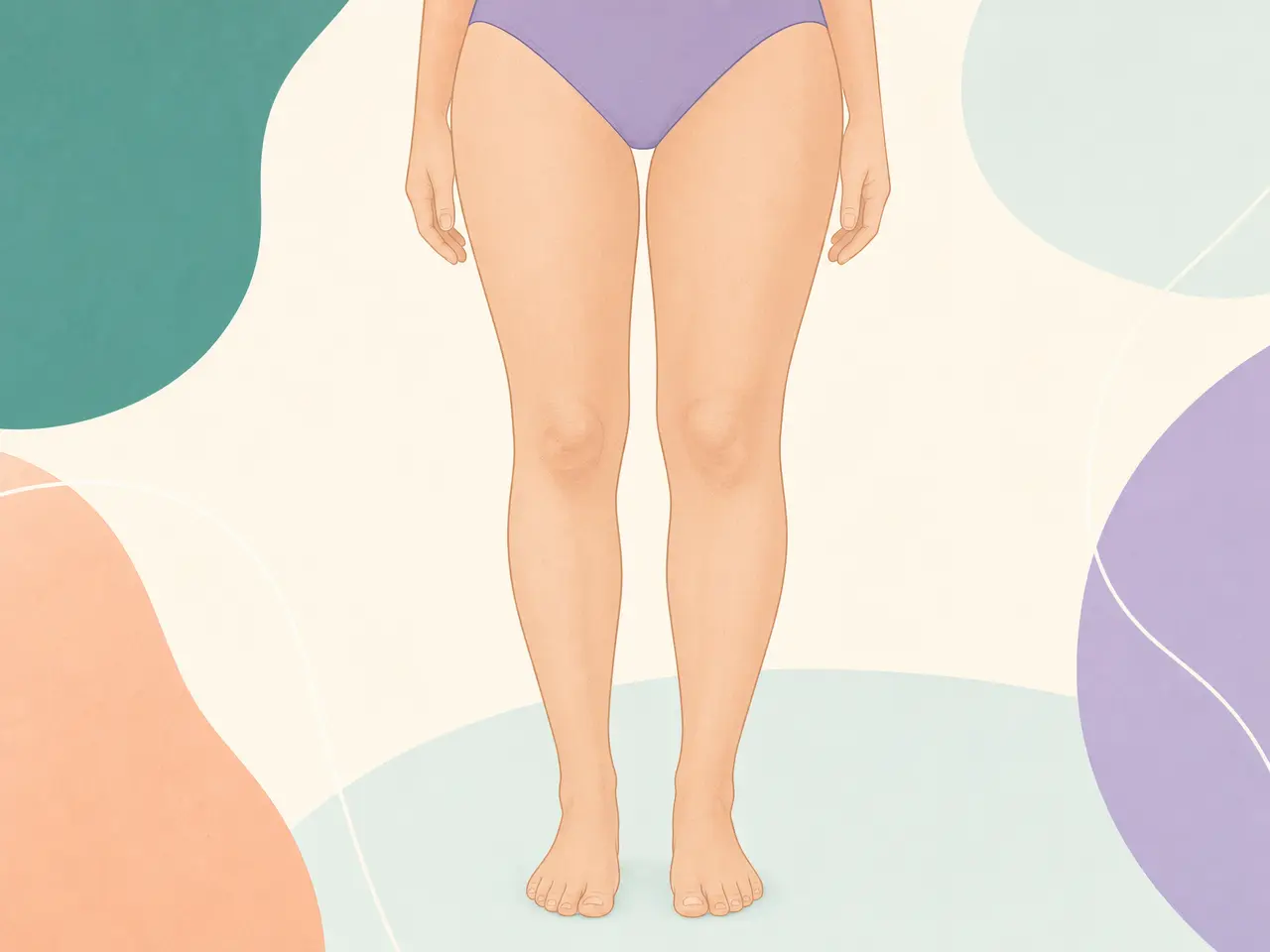
Stage 1: The skin surface is smooth. The underlying fat is soft and has small, pea-like nodules that can be felt but not seen. The legs are enlarged compared to the upper body, but the enlargement may be subtle — particularly in slim women or early presentations. This is the stage most likely to be dismissed or missed. The cuff sign at the ankle may already be visible: the leg is larger above the ankle while the foot stays normal.
Early lipedema often looks "normal"
Many people with Stage 1 lipedema have legs that look unremarkable in photos. The pain, tenderness, easy bruising, and diet-resistance are the key features — not always the visual appearance. Do not rule out lipedema based on appearance alone.
What does Stage 2 lipedema look like?
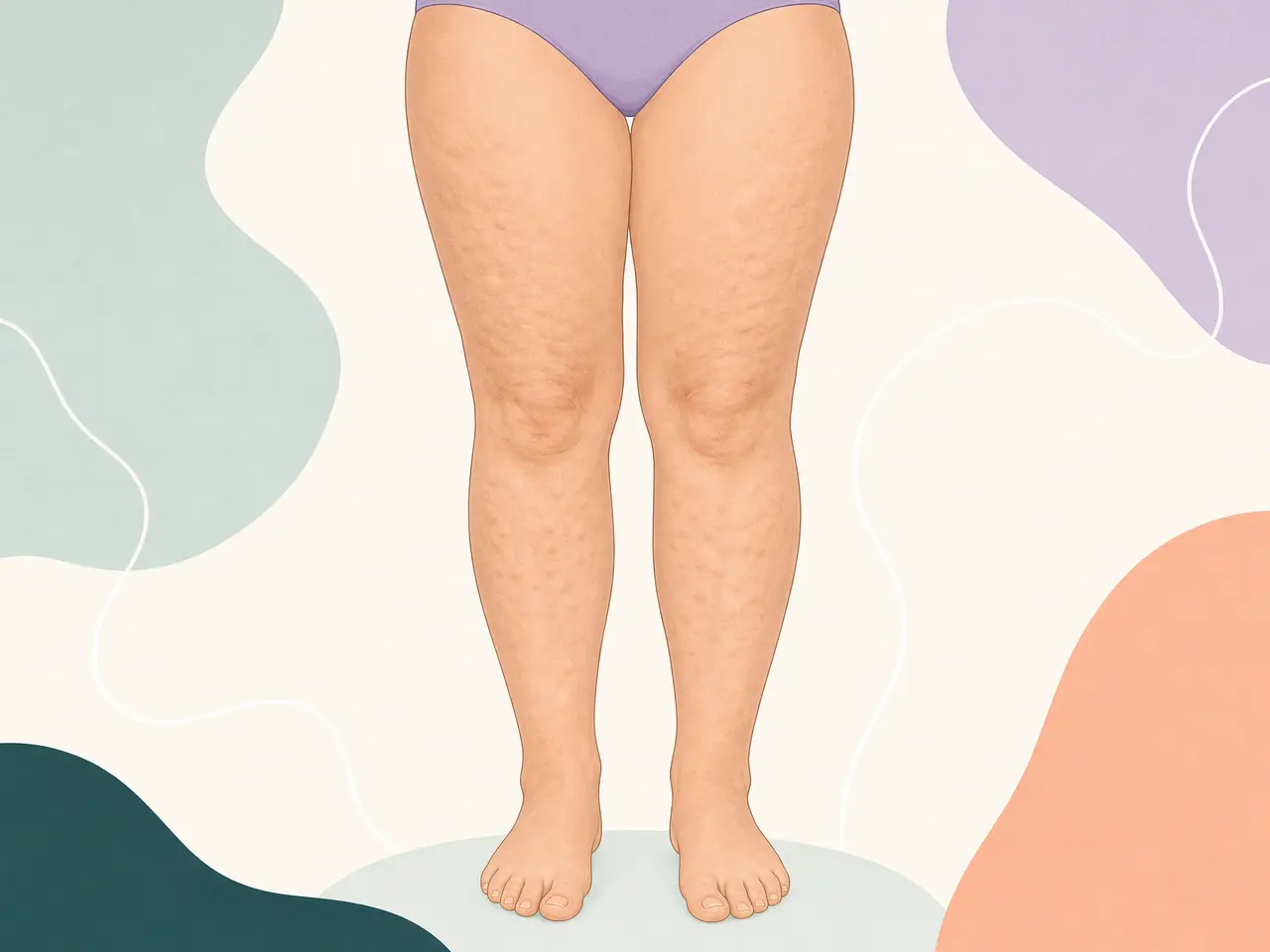
Stage 2: The skin takes on an uneven, orange-peel or mattress-like texture — visible indentation over the whole thigh surface. Nodules are larger and more numerous. The enlargement is more pronounced. Lobes of tissue may start to form at the inner knee and outer hip. The disproportion between the upper and lower body is typically clear. The cuff at the ankle is more visible.
What does Stage 3 lipedema look like?
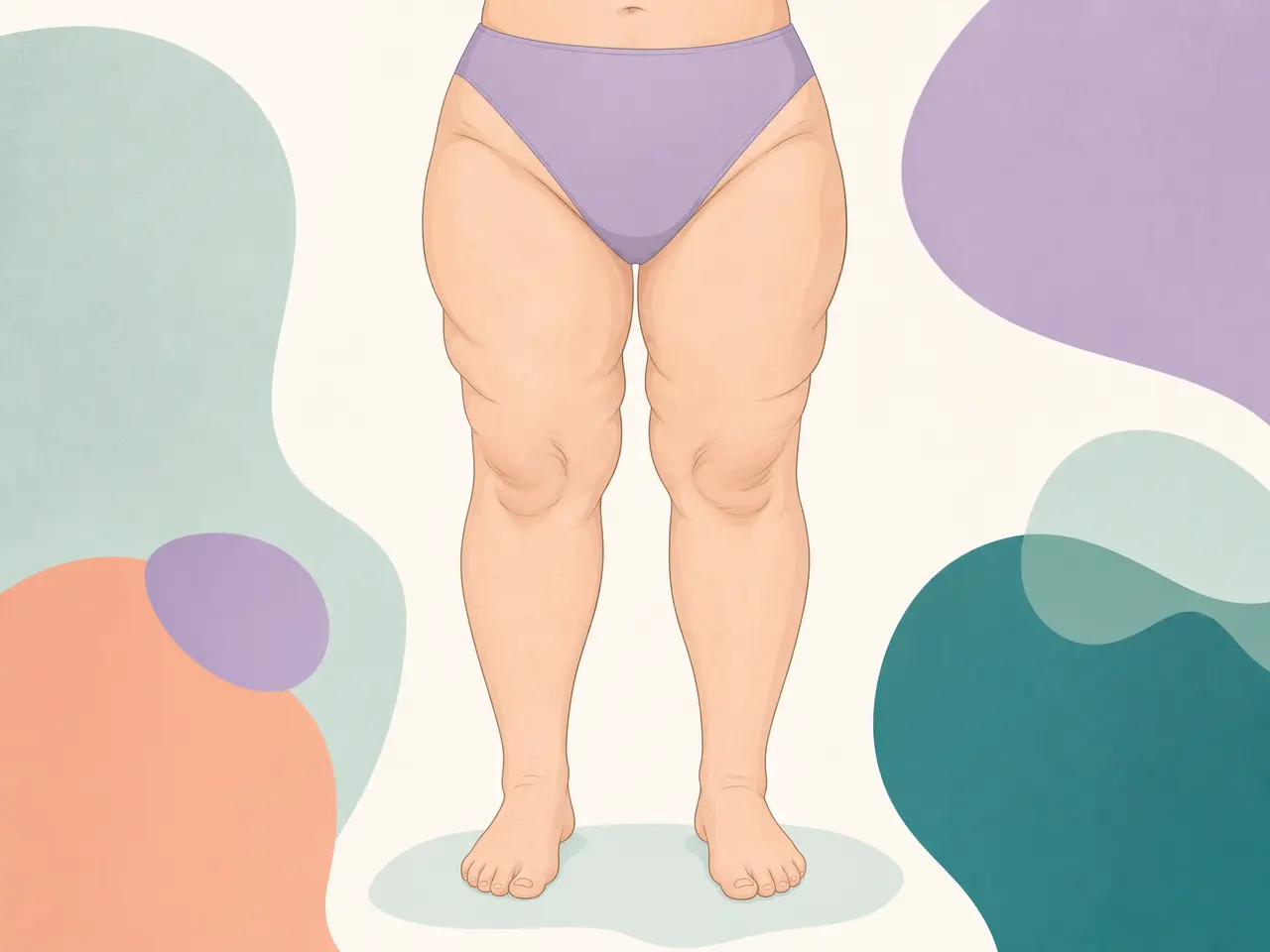
Stage 3: Large, soft lobes of tissue form at the inner thighs, outer hips, and around the knees. These can create significant functional problems — skin folds, difficulty walking, and increased pain. The skin surface is markedly irregular. The cuff sign at the ankle may now be dramatic. Note: Stage 3 is the presentation most commonly depicted in lipedema content online — but it is far from the only presentation, and most people with lipedema are not at Stage 3.
The online image problem
Because extreme presentations are visually striking, they dominate search results and medical textbook images. This creates a deeply inaccurate picture: most people with lipedema look nothing like Stage 3 images, especially early in the disease. If you looked online and thought "that's not me" — you may still have lipedema.
What does the cuff sign look like?
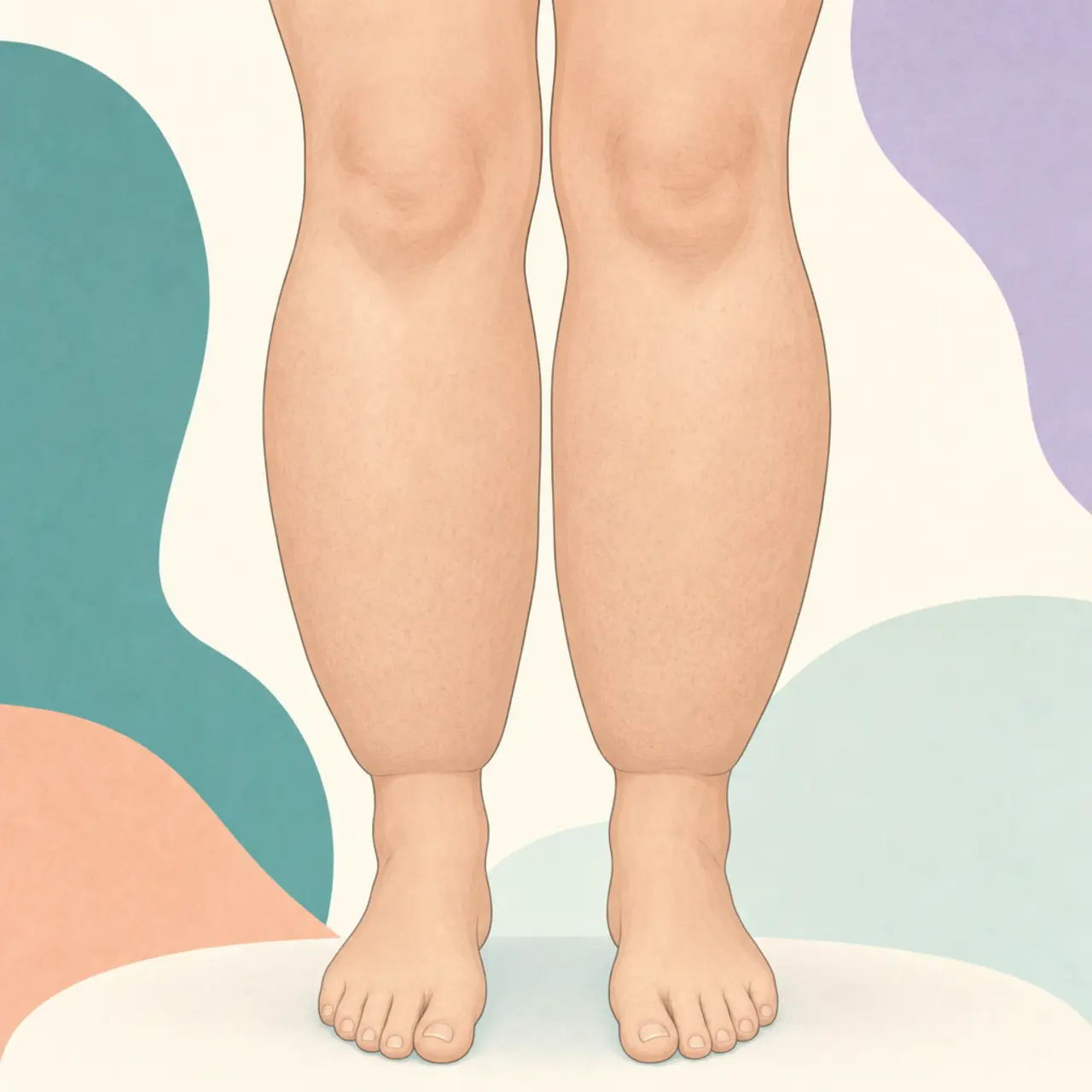
The cuff sign is one of the most diagnostically useful visual markers of lipedema. The enlarged fat of the leg stops abruptly at the ankle — the feet and toes remain normal-sized — creating a visible step or "bracelet" effect. It is visible in all stages, though more pronounced in later stages. The absence of foot swelling also helps distinguish lipedema from lymphedema, in which the feet are typically swollen.
Where does lipedema fat sit on the body?
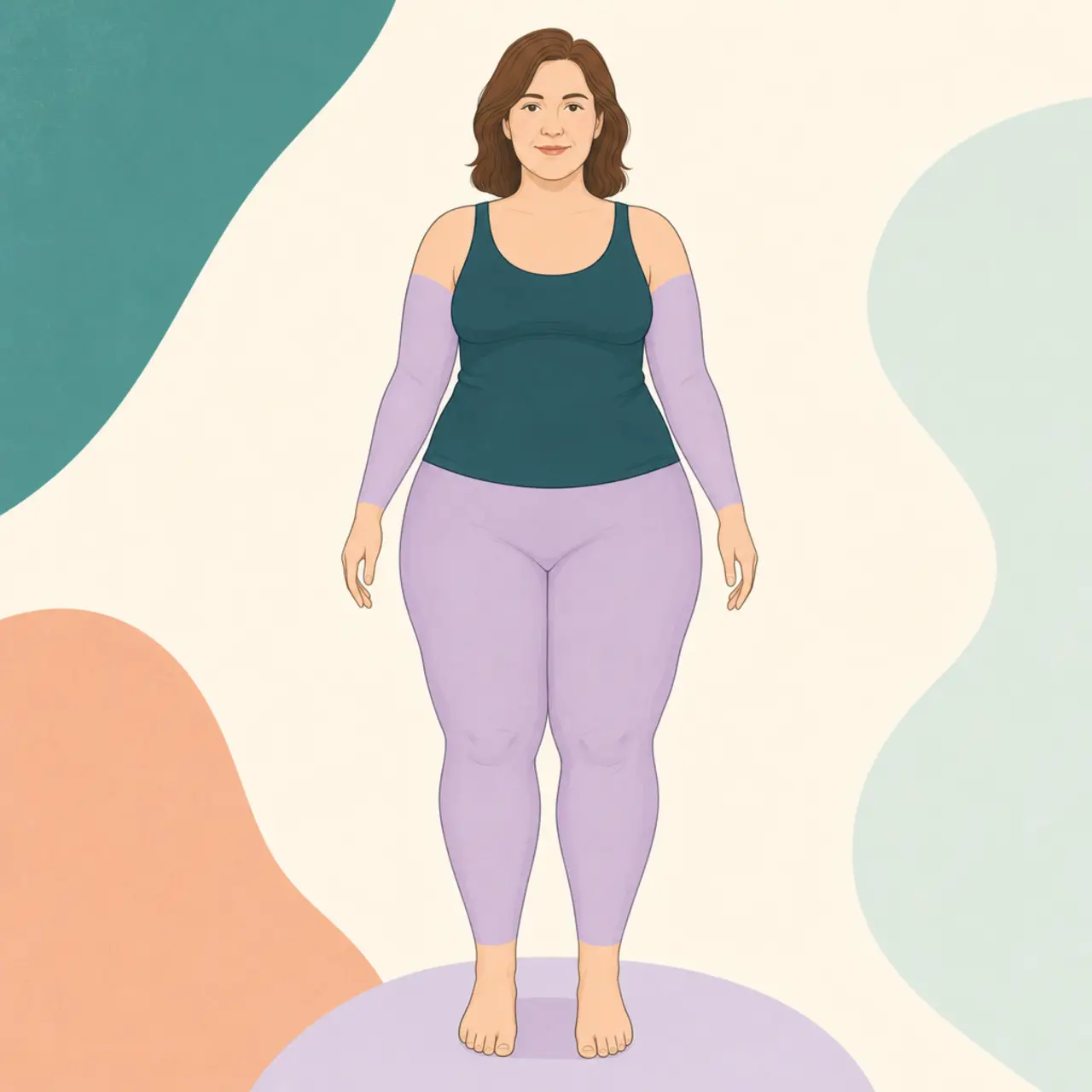
The diagram shows the typical lipedema distribution: the hips, thighs, and lower legs (Types I–III), with the arms also affected in many people (Type IV). Hands and feet are unhighlighted — they are characteristically spared. The torso and upper body are relatively unaffected in most cases, which produces the disproportion that is one of lipedema's defining features.
What do lipedema nodules feel like?
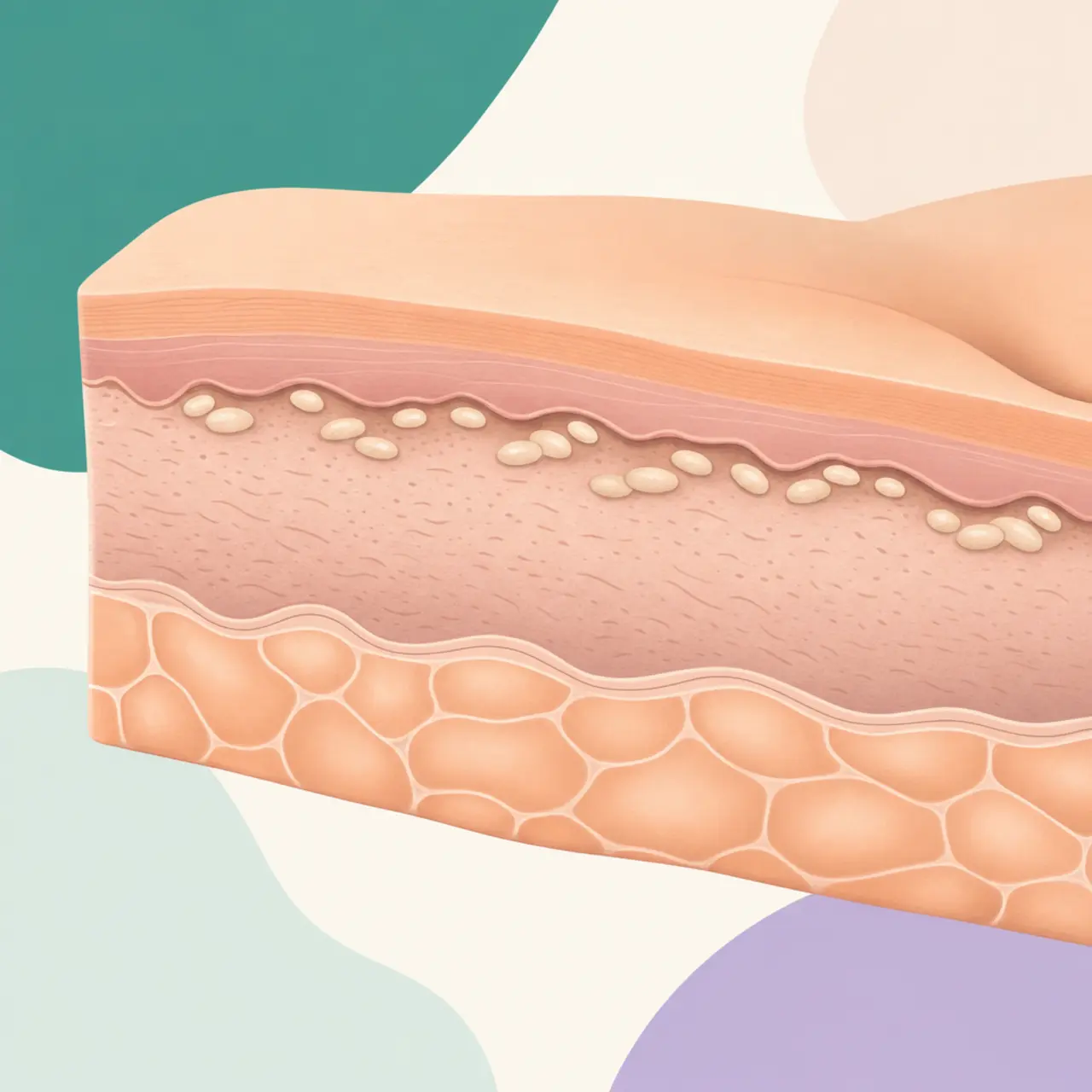
Lipedema fat contains pea- and rice-like nodules just below the skin surface. They are felt by rolling the skin between two fingers — not typically visible from the outside. In early stages the nodules are small and soft; in later stages they can be larger and denser. Their presence is one of the clinical features that helps distinguish lipedema from ordinary fat or lymphedema. The skin surface over them may look smooth (Stage 1) or dimpled (Stages 2–3).
What does lipedema look like in slim women?
In slim and normal-weight women, lipedema often presents as a subtler disproportion — slightly heavier hips, thighs, or upper arms that don't respond to diet, with tenderness that doesn't match the modest visual appearance. The skin may look smooth and the enlargement may seem mild. The pain and diet-resistance are often more obvious clues than the visual appearance.
Read more on our lean lipedema page.
Sources
- Life 2025 — Updated lipedema staging (1.5/2.5) pmc.ncbi.nlm.nih.gov
- Herbst KL et al. — US Standard of Care, Phlebology 2021 journals.sagepub.com
- Delphi Consensus on Lipedema Diagnosis, Nature Communications 2026 nature.com
- Lipedema Foundation lipedema.org